Here's the scoop:
- All the tricks I tried to help Lars handle being home alone
- Why we finally turned to a feline behaviorist
- What fluoxetine does in a cat's brain (and why it freaked me out)
- How my super-sweet Lars turned into a stranger with huge pupils
- Why I stopped it, despite professional advice
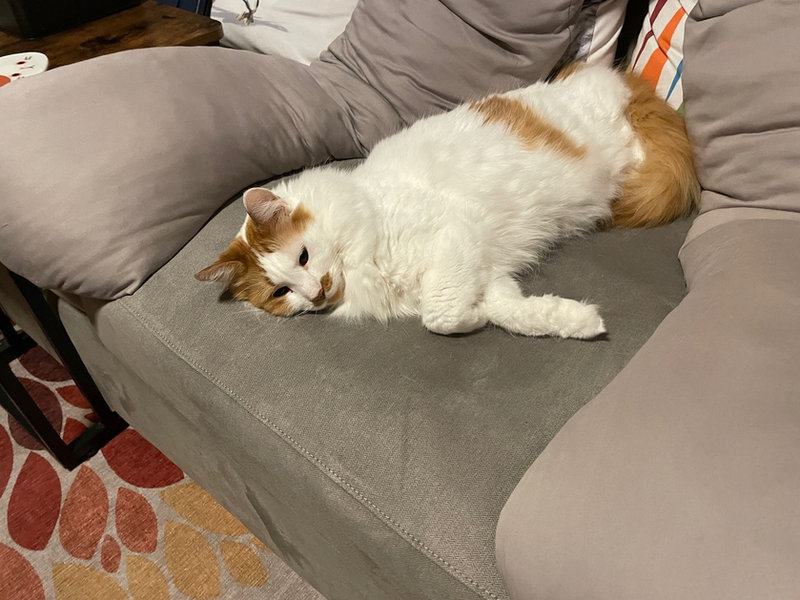
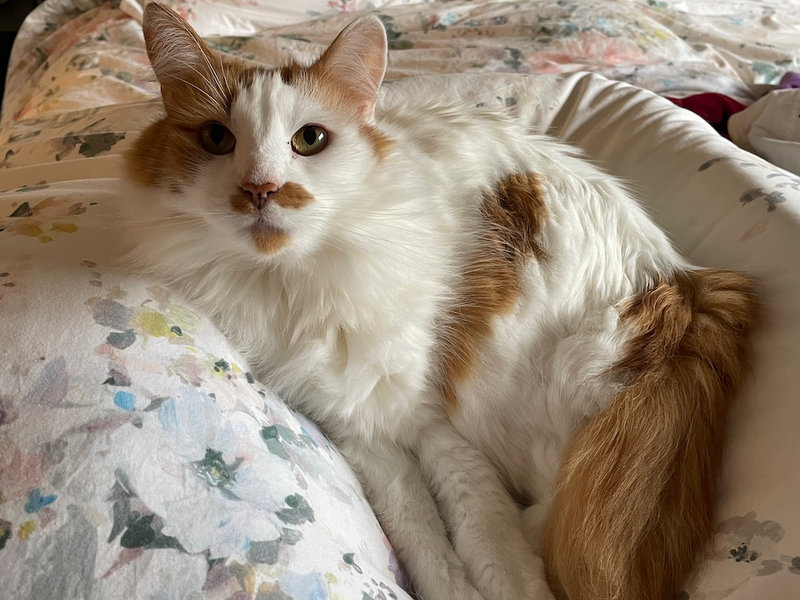
If you've read about Lars before, you know he's my tender little soul...sweet, snuggly and absolutely wrecked when we go on vacation.
And when I say I tried everything to help him, I mean everything.
Here's some of the ideas I tried for helping Lars with separation anxiety that I got from lots of online searches:
- Leaving a worn T-shirt with my scent
- Creating a safe "haven" room with food, water, litter and hiding spots
- Plugging in Feliway diffusers (multiple!)
- Playing soothing background music or white noise
- Pre-trip desensitization with mock absences
- Using remote cameras with voice functions
- Giving treats from a timed dispenser while away
- Avoiding loud entrances/exits and saying calm goodbyes
- Hiring the same sitter consistently
- Having sitter stay out of cat's "safe zone"
- Offering calming supplements or treats
- Using calming collars or sprays
- Playing with my cat before leaving to burn energy
- Offering special food only when I'm gone
- Providing vertical space and cozy hiding areas
- Gabapentin or CBD for trip days
You name it, I tried it. But Lars still hid. Still trembled. Still barely ate.
And it broke my heart.

So We Called in a New Pro
Enter: The cat behaviorist. He was knowledgeable. Confident. And he said something I'd hoped to avoid:
"You've tried all the behavioral tools. It's time to consider medication."
He recommended fluoxetine, a commonly prescribed SSRI (selective serotonin reuptake inhibitor) that's used to treat separation anxiety, aggression and compulsive behaviors in cats.
Fluoxetine 101: What Is It and How Does It Work?
Fluoxetine (a.k.a. the generic form of Prozac) works by increasing serotonin levels in the brain.
Here's what that means in regular-person terms:
- Serotonin is a neurotransmitter that helps regulate mood, anxiety, sleep and appetite.
- Normally, your body reabsorbs serotonin quickly, but fluoxetine blocks this reabsorption, so more serotonin hangs around.
- In theory, that extra serotonin = calmer, more emotionally balanced cat.
It can take 2 - 4 weeks (sometimes longer) to build up in a cat's system and show results. Once a cat has been on it for a few weeks, you can't just stop cold turkey. It should be tapered slowly to avoid withdrawal effects or rebound anxiety. It's often compounded into a flavored liquid for cats, but even then, it's bitter. Cats can smell a lie.
Operation Sneak Attack (a.k.a. Medicating Lars)
Lars was prescribed 0.25 mL per day of liquid fluoxetine. I started slowly:
- Day 1: 0.05 mL mixed into potent fishy wet food
- Added squeezy treats (kitty crack) to mask the flavor
- Gradually increased the dose by 0.05 mL daily
- By the end of the first week, we were at the full dose
But instead of calming down… Lars got worse.
Stranger Danger: My Cat Turned Into a Twitchy Alien
Within days of being on the full dose, Lars:
- Hid upstairs without reason
- Jumped at every tiny sound
- Had dilated pupils and rapid scanning behavior
- Started avoiding me (he ran when I tried to pet him!)
- Didn't want to be held (a first in his sweet little life)
- Lost his signature cuddly, soulful, connected vibe
I kept reading that fluoxetine could make cats sleepy or zombie-like. But Lars? He went full-on paradoxical anxiety mode. Apparently, this is a rare side effect, but it does happen.
The behaviorist didn't quite believe me. He urged me to stick it out.
But every fiber of my being screamed, "This is not my cat!! And this is not worth it!"
Trusting My Gut
After 2.5 weeks, I stopped the fluoxetine cold, only because he hadn't been on it long enough to require a taper.
And almost instantly…
- His eyes softened
- His cuddles came back
- He let me hold him again
- He stopped hiding
- He was himself
I was overwhelmed with relief.
Now, I know several people whose cats have been helped tremendously by fluoxetine for things like inter-cat aggression, overgrooming or marking. I'm genuinely thankful this med exists.
But for Lars? It was not the answer.
Moving Forward with Gentler Tools
Instead of daily meds that dull his sparkle, I've shifted my focus to as-needed calming tools during specific stress events (like vacations). Things like:
- Short-term gabapentin
- Pet Releaf CBD
- Familiar scents, predictable routines and behavioral training
I'd much rather work around his sweet personality than override it completely.
Takeaway Treats:
- Fluoxetine works by increasing serotonin in the brain, but it isn't magic for every cat.
- Side effects can include lethargy…or paradoxical anxiety (like in Lars' case).
- It takes time to work, and once established, requires tapering to stop safely.
- Some cats thrive on it, but others lose their spark... and you know your cat best.
- Medication can be powerful, but so is the bond between you and your cat.